
Why Personal Development Matters
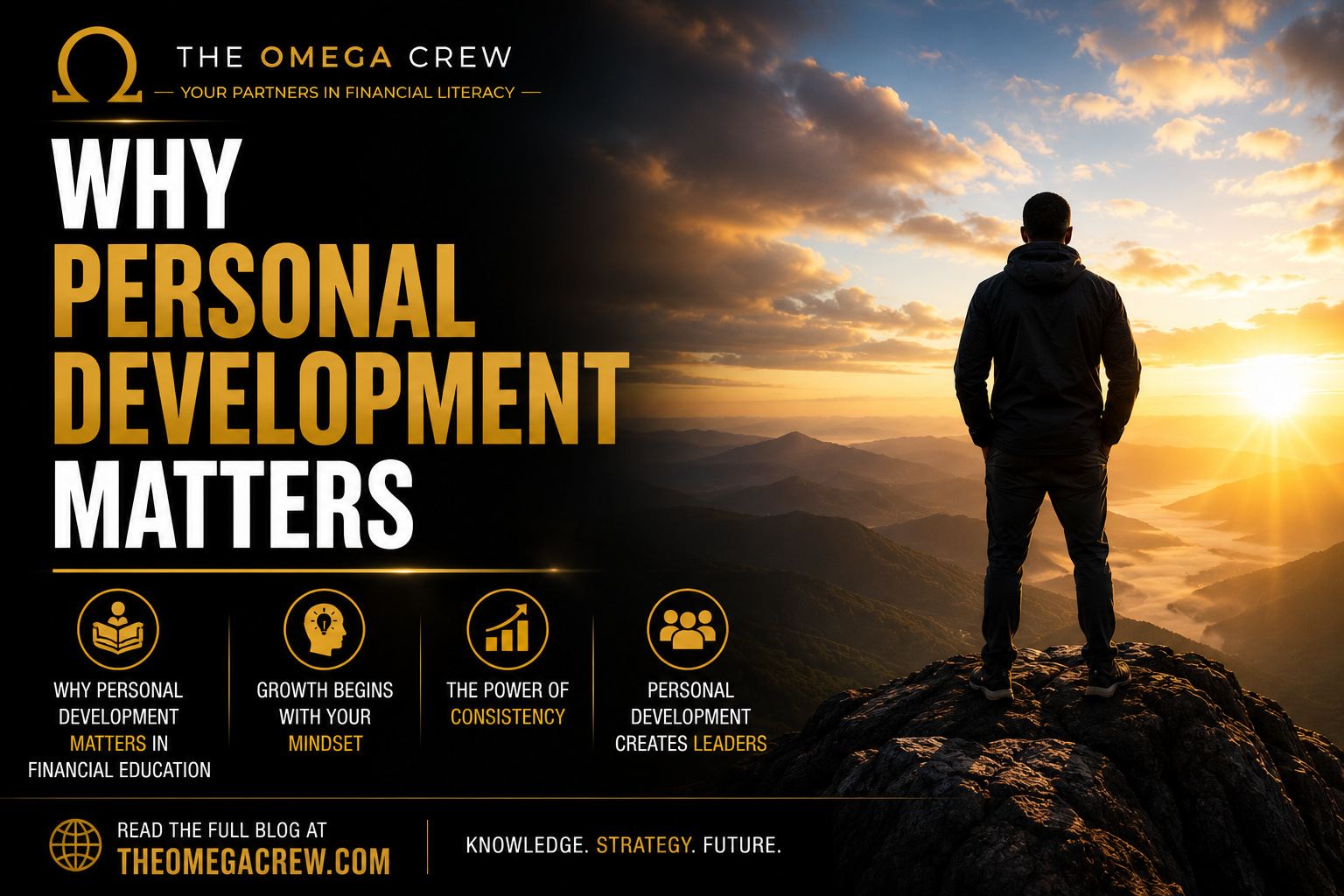
The Greatest Investment You Can Make Is in Yourself
Most people focus on changing their circumstances.
Few focus on changing themselves.
Yet personal development is often the foundation for growth in every area of life—including finances, leadership, relationships, and career.
As an author and financial educator, one lesson I've learned is this:
Your income may change over time.
Your job title may change.
The economy may change.
But the habits, mindset, and character you develop can influence how you respond to those changes.
That's why personal development matters.
What Is Personal Development?
Personal development is the ongoing process of improving your knowledge, skills, mindset, and habits.
It involves becoming more intentional about:
How you think
How you communicate
How you manage your time
How you respond to challenges
How you continue learning and growing
It's not about becoming someone else.
It's about becoming a better version of yourself.
Why Personal Development Matters in Financial Education
Financial education isn't only about numbers.
It's also about behavior.
Two people can have access to the same information and make completely different decisions.
Why?
Because financial decisions are often influenced by:
Habits
Mindset
Emotions
Long-term thinking
Personal discipline
Personal development helps people strengthen these areas.
Learning about budgeting is important.
Developing the discipline to follow a budget is equally important.
Understanding the importance of saving matters.
Building the habit of saving consistently matters too.
Knowledge and behavior work together.
Growth Begins with Your Mindset
Many people wait for the perfect opportunity before investing in themselves.
But growth often begins long before circumstances change.
It begins with a decision:
"I am willing to learn."
That mindset can lead to:
Reading more books
Attending educational workshops
Seeking mentorship
Developing leadership skills
Learning new financial concepts
Becoming more intentional with time and priorities
Personal growth doesn't happen overnight.
It's built one decision at a time.
The Power of Consistency
One of the most overlooked aspects of personal development is consistency.
Small actions repeated over time can create meaningful change.
Reading a few pages every day.
Listening to educational content during your commute.
Taking notes during a workshop.
Asking thoughtful questions.
Practicing new skills.
These habits may seem small individually, but over time they can help expand your knowledge and confidence.
Personal development isn't about perfection.
It's about progress.
Personal Development Creates Leaders
Leadership isn't defined by a title.
It's reflected in how you serve others, communicate your vision, and continue growing.
The best leaders are often lifelong learners.
They read.
They listen.
They remain curious.
They are willing to admit what they don't know and continue improving.
Whether you're leading a family, a business, a classroom, or simply your own life, personal development can help you become more intentional and effective.
Books Changed My Perspective
As an author, I believe books are one of the greatest tools for personal growth.
A good book can introduce a new idea.
Challenge an old belief.
Encourage a new habit.
Or inspire someone to think differently about their future.
The goal isn't to read hundreds of books.
The goal is to apply what you learn.
Because information alone doesn't create change.
Applied knowledge does.
Final Thoughts
Personal development is not a one-time event.
It's a lifelong journey.
The person you become tomorrow is shaped by the choices you make today.
Choose to learn.
Choose to grow.
Choose to invest in yourself.
Because while circumstances may change, the skills, character, and mindset you develop can serve you for years to come.
Growth isn't always immediate.
But every step forward matters.
And sometimes, the greatest transformation begins with a simple decision:
To become a student of your own potential.
This article is intended for educational purposes only and does not constitute financial, investment, tax, or legal advice. Individual circumstances vary, and readers should seek guidance from qualified professionals regarding their specific situations.
